
In 2026, the educational landscape is no longer defined by who has the largest campus, but by who has the most coherent digital footprint.
For universities, K-12 groups, and eLearning platforms, “visibility” has evolved beyond traditional SEO.
It is now about Search Everywhere Optimization—ensuring an institution is the top result not just on Google, but within AI-generated summaries, social search feeds, and voice assistants.
AI content creation has moved from a “productivity hack” to the fundamental infrastructure of institutional growth.
By leveraging AI to generate high-quality, structured, and multimodal content at scale, educational institutions are effectively “training” the internet to recognize them as the undisputed authorities in their specific academic niches.
The Shift to Generative Engine Optimization (GEO)
Traditional SEO focused on keywords; in 2026, Generative Engine Optimization (GEO) focuses on citations.
When a prospective student asks an AI assistant like Gemini or ChatGPT, “Which university has the best sustainable engineering program for international students?”, the AI doesn’t just provide a link; it synthesizes an answer based on the most authoritative and well-structured content it can find.
AI content tools allow institutions to “feed” these generative engines by:
- Structuring for Citations: Automatically generating FAQ blocks, schema markup, and structured data that AI models use to verify facts.
- Scaling Niche Authority: Rapidly producing deep-dive articles on highly specific sub-topics such as “AI-driven ethical frameworks in mid-market fintech” ensuring the institution is cited as a primary source across a vast range of academic queries.
- Answer Engine Optimization (AEO): Crafting concise, direct answers to the most common student “intent” questions, increasing the likelihood of appearing in Google’s AI Overviews and featured snippets.
Multimodal Presence: Dominating Social Search
For the 2026 student demographic, TikTok, YouTube, and Reddit are primary search engines. A student looking for “campus life at [University]” is more likely to trust a short-form video than a polished brochure.
AI content creation allows small marketing teams to maintain a high-frequency, multimodal presence that was previously impossible.
- Content Atomization: A single AI-generated long-form research paper can be instantly “atomized” into 10 TikTok scripts, 5 LinkedIn thought-leadership posts, and an automated email nurture sequence.
- Multilingual Localization: AI allows institutions to translate and localize their content into dozens of languages simultaneously. A domestic recruitment blog can be instantly transformed into a culturally relevant video script for the South Asian or Latin American markets, vastly expanding the institution’s global search reach.
- Synthetic Media & Avatars: Institutions are using AI avatars to provide 24/7 video-based tours and “Ask Me Anything” sessions. This ensures that even in different time zones, the institution remains “visible” and interactive, capturing international leads while the admissions office is closed.
Hyper-Personalization as a Visibility Magnet
In 2026, generic content is invisible.
High-intent prospects expect “Hyper-Personalization at Scale.”
AI content systems allow institutions to move away from static “one-size-fits-all” landing pages and toward Dynamic Enrollment Funnels.
If a prospective student has previously engaged with content about “biomedical ethics,” the AI-driven website will automatically restructure its homepage to highlight relevant faculty research, student testimonials from that specific department, and upcoming webinars on that topic.
This level of relevance keeps users on the site longer (increasing “dwell time” signals to search engines) and significantly improves conversion rates.
By showing the right content to the right person at the right time, the institution ensures that its visibility isn’t just “reach” it’s “resonance.”
The Data Feedback Loop: Predicting Search Trends
Modern AI content creation is not just about output; it is about intelligence.
Advanced AI platforms analyze real-time search patterns and social sentiment to identify “Emerging Academic Interests” before they become mainstream.
By monitoring what prospective students are discussing on decentralized forums or what technical skills are trending in job market data, AI systems can suggest and even draft content for new program pages or blog series.
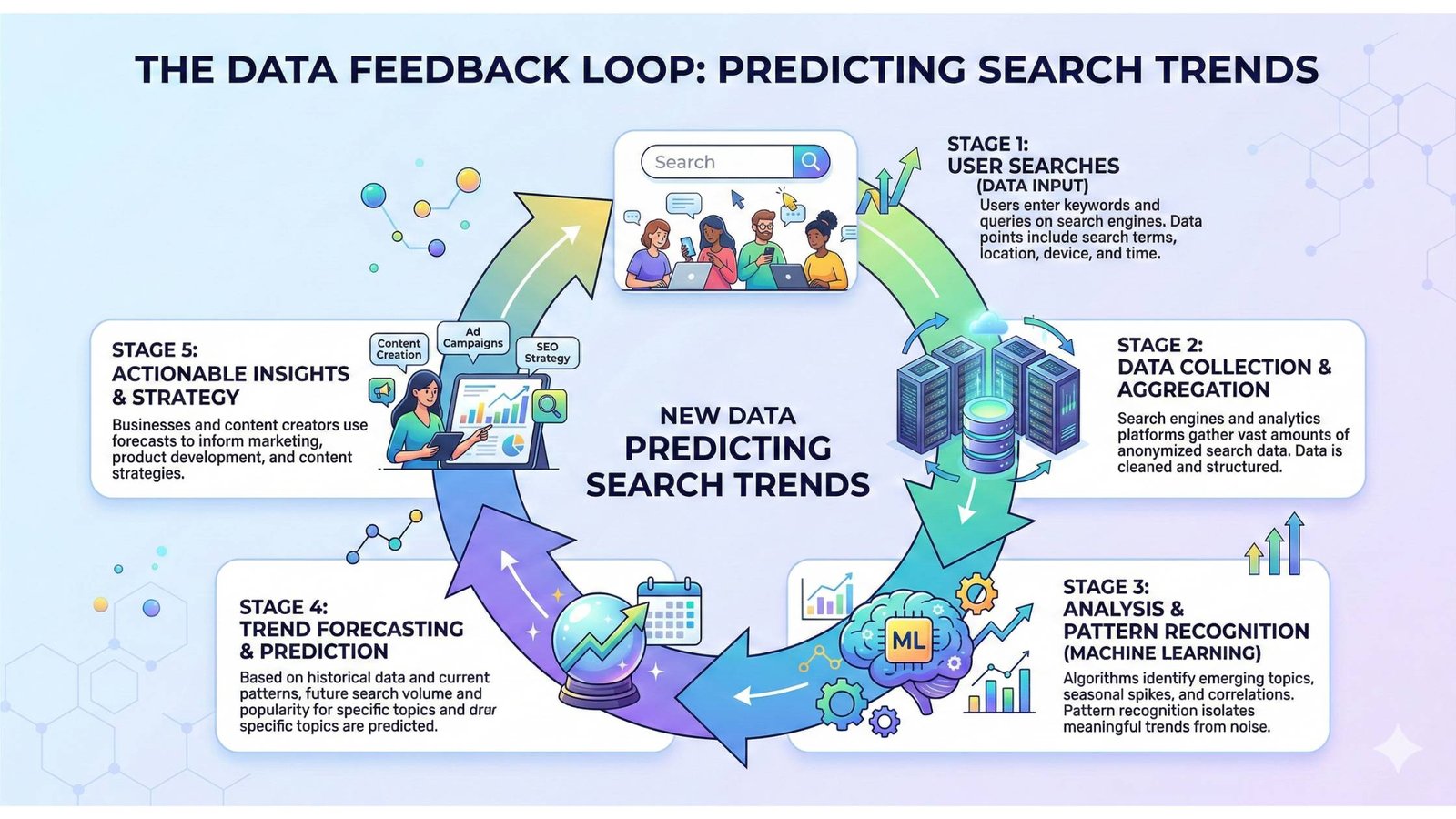
This “Predictive Visibility” allows an institution to be the first to market on a new topic, securing the top search positions and establishing early authority before competitors even realize the trend has shifted.
The Human-AI Hybrid: Quality as the Ultimate Metric
While AI handles the scale, institutional authority in 2026 is still verified by human expertise.
The most visible institutions use a Hybrid Content Model: AI handles the tactical execution (drafting, tagging, formatting, and distributing), while faculty and subject matter experts provide the strategic “Soul” (unique perspectives, original research, and lived experience).
In an era of AI-generated noise, Originality is a Ranking Signal. Search engines and AI models are increasingly prioritizing content that demonstrates “E-E-A-T” (Experience, Expertise, Authoritativeness, and Trustworthiness).
By using AI to clear the administrative burden of content production, educators are freed to produce the high-level, human-driven insights that truly differentiate the brand in a crowded digital marketplace.
Are you ready to turn your institution’s academic expertise into a dominant, AI-ready digital presence?
Schedule a free consultation call to discuss a custom Educational Visibility & GEO Audit. You will get a detailed analysis of how AI search engines currently “see” your institution, a mapping of your competitor’s content gaps, and a 90-day roadmap to build a scalable, multimodal content engine—completely obligation-free.
Blog written by Pranit Kamble