
An NGO’s ability to drive donations, attract volunteers, influence policy, and retain the trust of its beneficiary communities is inseparable from its ability to communicate.
The organisation that tells its story with consistency, depth, and strategic intent across every digital channel it occupies builds the credibility that converts a first-time website visitor into a long-term supporter.
The organisation that publishes sporadically, covers its mission in broad strokes, and leaves the majority of the questions its audience is asking unanswered online exists in a state of perpetual invisibility, regardless of the quality of the work it is doing in the field.
The resource constraint that prevents most NGOs from building the content presence their mission deserves is not a strategy problem. It is a production problem.
Communications teams in the non-profit sector are among the most stretched in any industry, managing multiple stakeholder relationships, reporting obligations, and campaign cycles simultaneously with headcounts that would be considered inadequate for the same workload in a commercial organisation.
In 2026, AI content production has removed the production constraint from the equation entirely for NGOs that are willing to build it into their content strategy.
The result is not simply more content. It is a structured content cluster architecture that builds the topical authority, the search visibility, and the audience depth that transforms an NGO’s digital presence from a brochure into a movement.
What a Content Cluster Actually Means for an NGO’s Digital Strategy
A content cluster is a deliberate architecture of interconnected content pieces built around a central topic that the organisation owns with authority.
For an NGO, this central topic is almost always the intersection of the cause it serves and the specific audience it is trying to reach. A child nutrition NGO does not simply publish content about hunger.
It builds a cluster of content around child malnutrition that covers the clinical dimensions, the geographic dimensions, the policy dimensions, the donor impact dimensions, and the community intervention dimensions in enough depth and breadth that any person searching for information about this topic is consistently finding this organisation’s content at every point in their research journey.
The strategic value of a content cluster over isolated content production is compounding topical authority.
When a search engine encounters an organisation that has published a comprehensive, interlinked body of content around a specific subject, it assigns a level of subject matter authority to that domain that makes every subsequent piece of content in that cluster easier to rank.
The tenth piece the NGO publishes on child malnutrition ranks faster and higher than the first because the preceding nine have already established the domain’s credibility in that topical territory.
For NGOs whose funding, volunteer recruitment, and policy influence all depend on being found and trusted by the right audiences at the right moments, this compounding authority is not a technical SEO benefit. It is the digital infrastructure that makes the mission sustainable.
The Production Gap That AI Closes for Communications Teams
The architecture of a high-performing content cluster requires volume that most NGO communications teams cannot produce within their existing resource constraints.
A single pillar page covering the organisation’s primary topic area at sufficient depth, supported by eight to twelve supporting pieces addressing related subtopics, each optimised for the specific search queries that bring the right audience to the cluster, represents a production volume that would take a two-person communications team several months to deliver while managing every other element of their role simultaneously.
AI content production collapses this timeline to a fraction of its manual equivalent.
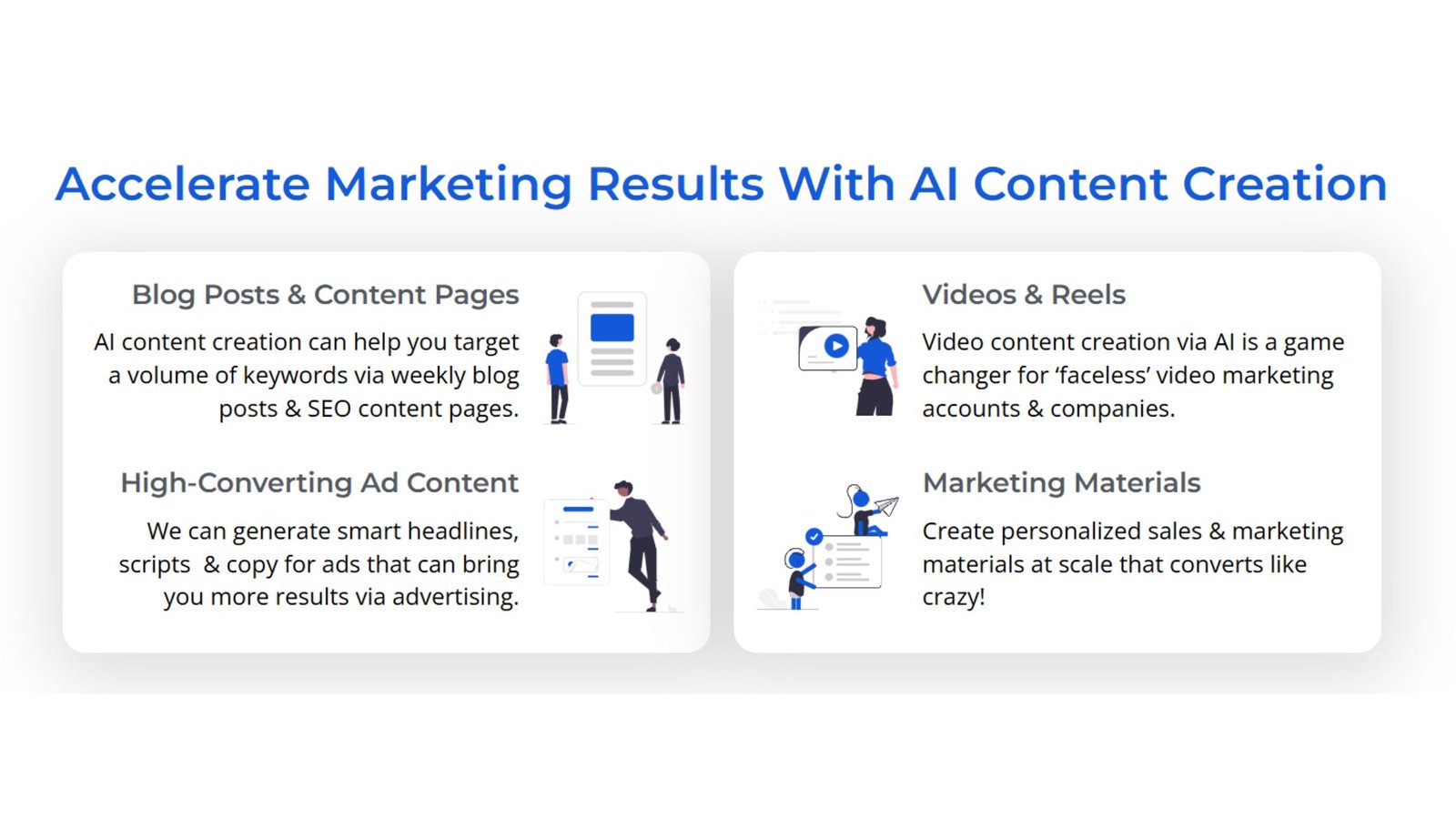
A communications lead who would previously spend three weeks researching, structuring, drafting, and editing a single long-form pillar piece can use AI production tools to move from a strategic brief to a publication-ready first draft in a significantly compressed timeframe, reserving their expertise for the editorial judgment, mission alignment verification, and beneficiary sensitivity review that AI cannot replicate.
The supporting content pieces that fill the cluster around the pillar, the FAQ articles, the case study frameworks, the policy explainers, the volunteer recruitment content, and the donor journey pieces, can be produced in parallel rather than sequentially.
A communications team that was previously constrained to publishing two or three pieces per month can build and deploy a complete content cluster within a single quarter, establishing the topical authority that would otherwise take years to accumulate through organic production capacity.
Matching Content to the NGO Audience at Every Stage of Their Journey
One of the most strategically important capabilities that AI content production unlocks for NGOs is the ability to build content that speaks to every distinct audience segment and every stage of their engagement journey simultaneously rather than prioritising one segment over another based on production bandwidth.
A policy influencer discovering the NGO for the first time needs a different content experience than a mid-level donor evaluating the impact of their existing contribution, or a field volunteer looking for operational guidance, or a journalist researching background for a story about the cause.
Each of these audiences enters the content cluster through a different search query, has a different level of prior knowledge, and needs a different information architecture to move from initial engagement to deeper commitment.
Without AI production capacity, a communications team must choose which audience to prioritise in any given content cycle.
The result is an uneven content landscape where one segment is well served and others are underserved, which creates gaps in the digital presence that competitors or adversarial narratives can fill.
With AI content production, the NGO builds content for every audience simultaneously, ensuring that every person who arrives at the organisation’s digital presence through any entry point finds content that is specifically relevant to their context and their stage of engagement.
The Donor Journey Content That AI Production Makes Possible at Scale
For most NGOs, the donor journey is the most commercially critical content pathway in the entire digital presence, and it is also one of the most frequently underdeveloped.
A prospective donor who is considering their first contribution typically passes through a sequence of content needs before they commit: they want to understand the scale and nature of the problem, verify the credibility and accountability of the organisation, see evidence that previous donations have produced measurable outcomes, and feel an emotional connection to the beneficiaries of the work.
Each of these needs corresponds to a specific content type that belongs in a well-structured donor journey cluster. The problem definition content establishes the scale and urgency of the cause.
The accountability content covers governance, financial transparency, and independent verification of impact claims.
The impact evidence content delivers the specific, story-driven proof of outcomes that transforms an abstract donation into a tangible act of change.
The emotional connection content creates the human relationship between donor and beneficiary that makes the commitment feel personal rather than transactional.
AI content production allows an NGO to build all four of these content layers comprehensively and simultaneously, ensuring that a prospective donor who follows the natural sequence of their research journey finds a complete and compelling answer at every stage rather than encountering gaps that introduce doubt or send them to a competing organisation’s content to fill the information need.
SEO Authority That Compounds Mission Reach Over Time
The SEO benefit of a well-built AI-assisted content cluster is the dimension that most NGO communications strategies underestimate because its returns are not immediate.
A content cluster that is built and deployed in month one does not produce its full search visibility return in month two.
It produces it across the six to twelve months that follow, as the search engine processes the depth and breadth of the topical coverage, assigns increasing authority to the domain, and begins surfacing the organisation’s content for queries it was not previously visible for.
For an NGO whose mission depends on reaching specific communities, influencing specific decision-makers, and attracting support from specific donor profiles, this compounding search visibility is the digital equivalent of a physical presence in every community the organisation serves.
A person searching for information about clean water access in the Horn of Africa who encounters the NGO’s authoritative cluster content at every point in their research is not simply a website visitor.
They are a potential advocate, donor, volunteer, or policy ally whose engagement with the mission began through a piece of content that AI production made possible within a communications budget that would not otherwise have stretched to cover it.
The organisations that build their content clusters now, in 2026, with AI production as the infrastructure that makes the volume achievable, will hold the search authority and audience relationships that their slower competitors will spend years trying to catch up to.
Schedule a free consultation to explore what an AI-assisted content cluster architecture would look like for your NGO’s primary cause area and audience segments. You will receive a complete audit of your current content presence and the topical authority gaps your cluster strategy needs to close, a custom content architecture mapping your pillar topics and supporting content requirements across every key audience segment, and a 90 day production roadmap designed to build your search visibility, donor journey content, and policy influence presence simultaneously, entirely obligation-free.
– Blog written by Pranit Kamble